
What Is the Customer Journey? (And Why It Matters for Your Content)
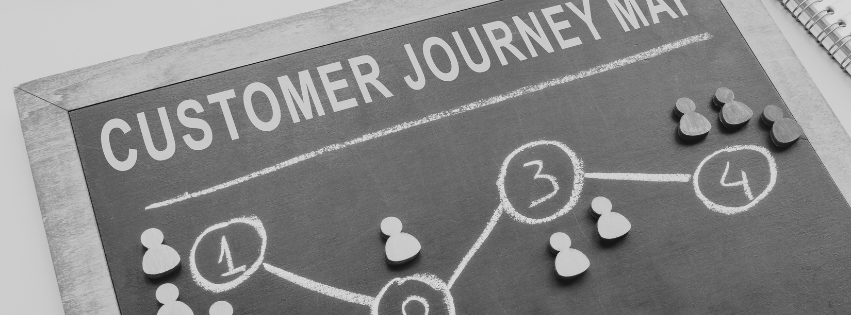
The customer journey is the buying path someone takes from the moment they first learn about you to the moment they decide to work with you or buy from you. Find out how you can leverage the customer journey in your own marketing efforts.
MARKETING STRATEGY
11/18/20256 min read
What Is the Customer Journey?
(And Why It Matters for Your Content)
The customer journey is the buying path someone takes from the moment they first learn about you to the moment they decide to work with you or buy from you. It's not a single leap; it's a series of smaller steps, each one requiring something different from you.
Think about the last time you made a purchase decision that mattered to you. Maybe it was hiring a contractor, choosing a new software tool, or investing in a service for your business. You didn't just stumble across the company and immediately hand over your credit card. You probably spent time researching, reading reviews, comparing options, and building trust. That process, that's the customer journey.
People don't go from stranger to customer overnight. They need time to understand their problem, explore their options, and build confidence in their choice. When you understand this journey, you can give them the right message at the right time and that's when your marketing starts to feel natural instead of forced.
At Journey Marketing, we build marketing strategies around this concept because we know that when your content supports each stage, your message becomes clearer and your business grows with less effort. Instead of shouting into the void and hoping someone converts, you're walking alongside your customer, helping them make the best decision at each stage of their journey.
The Awareness Stage: Help People Understand Their Problem
What Your Customer Needs Right Now
At the awareness stage, your potential customer is just beginning to notice a challenge or frustration. They might not have the words to describe their problem yet—they just know something feels off or hard. Maybe their website isn't bringing in leads, or their marketing feels scattered, or they're spending hours on social media without seeing results.
This is the earliest moment in their journey, and your job isn't to sell. It's to help them see and name what they're experiencing. It's about shining a light on the problem in a way that makes them feel understood, not overwhelmed.
Your message at this stage should feel like a helpful conversation with a friend who gets it. You're not pushing a solution yet, you're simply acknowledging what they're going through and helping them make sense of it.
What Awareness Stage Content Looks Like
Good awareness stage content is educational, approachable, and focused on clarity. It meets people where they are and gives them language for what they're feeling. This is where you build trust by showing that you understand them before you ever ask them to trust you with their business.
Consider blog posts that explain common problems in simple terms. A title like "Why Your Website Isn't Getting You Customers (And What to Do About It)" speaks directly to someone who feels stuck but doesn't know why yet. It's not telling them to hire you, it's helping them understand what's happening.
Social media posts work beautifully at this stage too. Quick tips that simplify one frustration, short videos that explain a concept, or even a simple graphic that says "here's what this actually means" can stop someone mid-scroll and make them think, "Yes, that's exactly what I'm dealing with."
Quick how-to guides and "why this matters" articles also serve this stage well. They're the type of content that gets saved, shared, and revisited. They're not about you yet, they're about your customer and what they need to know.
When you create an awareness stage content strategy, you're planting seeds. You're showing up as the guide before someone even knows they need one. And that early trust becomes the foundation for everything that follows.
The Consideration Stage: Help Them See Their Options
What Your Customer Needs Next
Once someone understands their problem, they move into the consideration stage. Now they're actively looking for answers. They want to know what's possible, what works, and what might be right for them. They're comparing approaches, reading reviews, and asking questions like "What's the difference between these options?" or "How do I know if this will work for me?"
This is where your content should educate and guide, not pressure. Your audience is still deciding, and the worst thing you can do is make them feel rushed or overwhelmed. Instead, you want to be the clear, steady voice that helps them think through their options with confidence.
At this stage, people are doing their homework. They're reading blog posts, watching videos, and looking for proof that you know what you're talking about. They're not quite ready to commit, but they're paying close attention to who makes them feel most confident.
What Consideration Stage Messaging Should Include
Strong consideration stage messaging is all about clarity and education. You're answering the deeper questions, removing confusion, and helping your audience see why certain choices make sense.
Frequently asked questions are powerful here. Not the generic ones. Real questions your customers actually ask. When you answer them honestly and thoroughly, you remove barriers and build trust. A simple FAQ page or a blog post that tackles common concerns can be the difference between someone moving forward or clicking away.
Comparison content also serves this stage well. Not comparison in a way that tears down competitors, but content that helps people understand the differences between approaches. For example, if you're a web designer, a post like "DIY Website vs. Working with a Designer: What's Right for Your Business?" helps someone weigh their choices without feeling pushed. You're giving them the information they need to make the best decision for themselves, even if that's not you.
A few years back, I worked with a manufacturing client who had a problem we see way too often. People were finding them organically, which is great. But then? Nothing. No calls. No contact form fills. Just crickets.
When we dug into their content, the issue became pretty clear. Everything on their site lived in the awareness stage. They'd nailed talking about the problem. But they'd completely skipped the part where they explained why they were the right choice to solve it.
Your website visitors are on a journey. And if your content only meets them at the beginning of that journey, you're going to lose them before they ever get to the decision stage.
That’s why the consideration stage is so important. It’s all about trust. When you answer questions honestly, show your work, and help people think clearly, they start to see you as the right partner. Not because you convinced them, but because you helped them convince themselves.
The Decision-Making Stage: Make It Simple to Move Forward
What Your Customer Needs to Take Action
By the time someone reaches the decision stage, they're almost ready. They've done their research, they understand their options, and now they're looking for that final bit of confidence. They just need to know that you're the right choice and that moving forward will be easy.
Your message here should remove doubt and make the next step feel simple and safe. This isn't the time for vague calls to action or confusing processes. It's the time for clarity, proof, and a welcoming invitation.
People at this stage are asking questions like "Can I really trust this person with my business?" and "What happens after I say yes?" Your content needs to answer both.
What Decision Stage Content Examples Look Like
Effective decision stage content examples lead with proof and end with clarity. Show them you've done this before. Show them what happens next. Show them that other people like them have made this choice and it worked out well.
Client testimonials and success stories become incredibly powerful at this stage. Not just a quote on your website, but real stories with details. What was the client struggling with? What did you do together? What changed for them? When someone can see the transformation that's possible, it becomes easier to imagine their own.
Your service pages need to be clear and reassuring. Explain exactly what you offer, how you work, and what someone can expect when they choose you. Remove the mystery. Make it easy to understand what they're getting and how the process works.
Simple offers or intro calls can bridge the gap between consideration and commitment. Something like "Let's spend 30 minutes talking about your goals, no pressure, just clarity" makes it safe to take that next step.
The decision stage is where trust turns into action. When you make it simple and reassuring, people move forward with confidence and that's when your marketing truly works.
When Your Message Fits the Moment, Your Marketing Works
Good marketing isn't about posting more. It's about helping your customer step by step—meeting them where they are and guiding them forward with clarity and care.
When you create content for every stage of the customer journey, something shifts. Your audience stops feeling like you're trying to sell them something and starts feeling like you're genuinely trying to help them. They trust you. They remember you. And when they're ready, they choose you.
That's what happens when your message fits the moment. Your marketing stops feeling forced and starts feeling natural. Your business grows in a way that's sustainable and real, built on relationships instead of tactics.
Questions? We’re here for you.
If you want help building a clear customer journey for your business, we’re here to walk with you. At Journey Marketing, we help business owners create content strategies that actually connect, so your message reaches the right people at the right time.
Let's make your marketing work the way it should: by serving the people you're here to help. Contact us directly if you want to learn more.
© 2025 Journey Marketing. All rights reserved.